
Synopsis:
Hidden HVAC wear develops quietly and leads to failure when systems face sustained summer demand.
Key Takeaways
- Most breakdowns stem from gradual wear, not sudden failure
- Continuous operation exposes airflow, electrical, and refrigerant issues
- Warning signs appear early but are often overlooked
- Preventive maintenance reduces breakdown risk and improves efficiency
- Targeted HVAC repair is effective when issues are caught early
Most air conditioning failures during summer aren’t sudden. They develop slowly over months. Gradual wear on coils, motors, and electrical parts goes undetected through mild spring weather. Then temperatures rise, systems run harder, and the problems that were already forming finally show themselves.
For Vancouver homeowners, this pattern repeats every cooling season. Smart Choice Heating & Cooling, Inc. sees it across Clark County each year. Systems that handled April with no trouble show serious strain by late June.
You’ll find here what hidden HVAC wear looks like, which components fail first under peak demand, and when HVAC repair in Vancouver, WA is the right call.
Why HVAC Systems Fail When Cooling Demand Peaks
Most systems for heating and air conditioning in Vancouver, WA spend spring running at low capacity. That changes fast when summer arrives.
When temperatures climb, your system shifts from occasional short cycles to near-continuous operation. That demand increase doesn’t create new problems. It exposes problems that already existed.
A system running two to four hours a day in April may look perfectly healthy. That same system running twelve or more hours in July tells a different story. Small faults that went undetected under light use become failures when your system runs hard for days straight.
This is why residential HVAC repair calls spike every summer across Clark County. We see this pattern every year, and it is tied to wear that built up quietly over months.
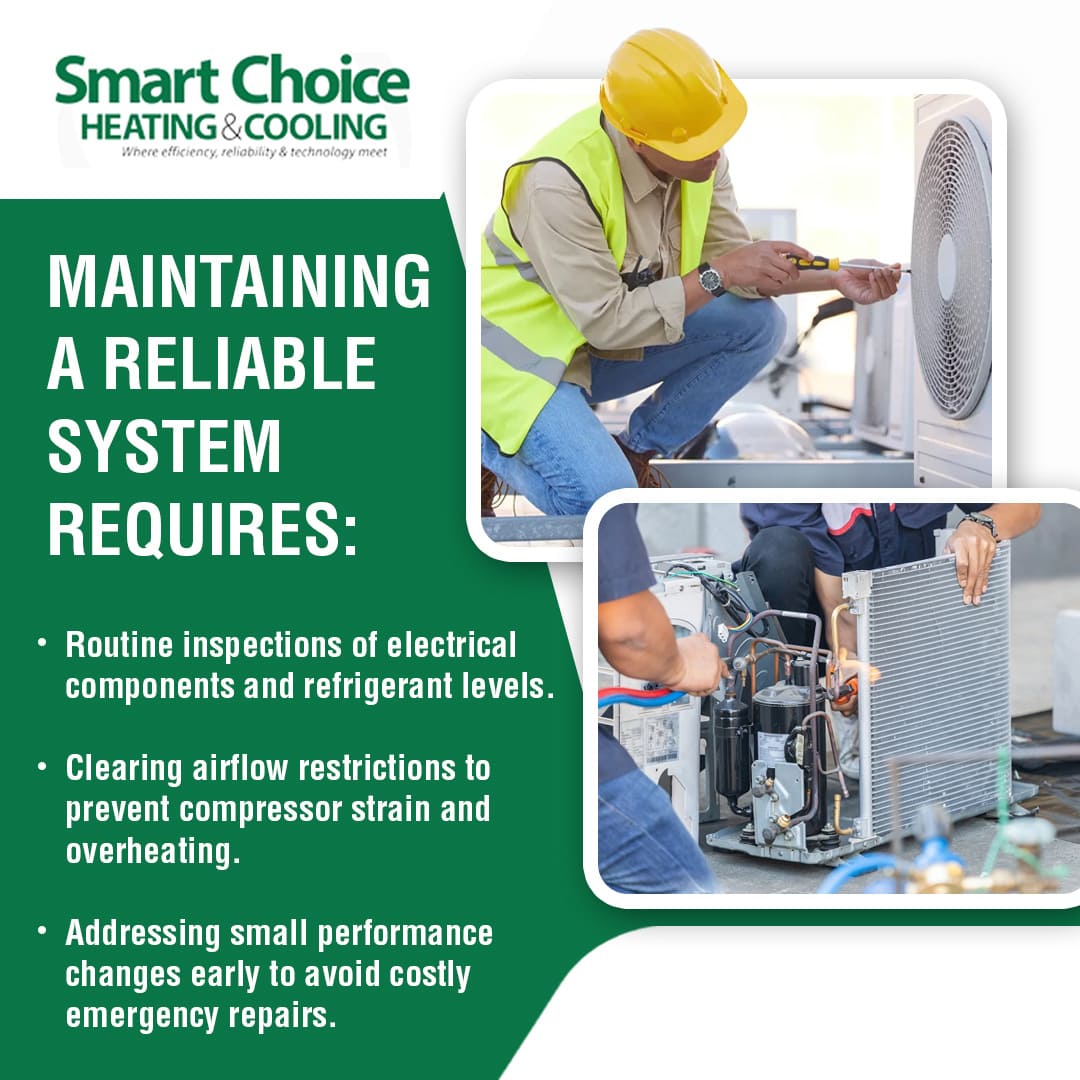
The Most Common Hidden Issues That Lead to HVAC Failure
We see these failure causes most often during service calls across Clark County, especially as systems begin working harder heading into summer.
Dirty Coils and Restricted Airflow
Your system’s evaporator and condenser coils move heat in and out of your home. When dust, pollen, and debris build up, heat transfer slows down. The system runs longer to reach your set temperature. Parts begin to overheat. Safety controls may shut the system down to prevent damage.
Spring in the Pacific Northwest brings heavy pollen. This buildup accelerates coil contamination faster than most homeowners expect. Dirt and debris remain one of the leading causes behind residential HVAC repair calls, especially when systems go months without professional cleaning.
Refrigerant Imbalance and Small Leaks
Refrigerant does not get used up during normal operation. If levels drop, there is usually a leak. Small leaks form at fittings, coil joints, or aging copper lines. Low refrigerant reduces cooling output and forces the compressor to work harder. Over time, this strain can lead to major system damage. Many homeowners only notice this issue when temperatures rise and cooling demand increases.
Electrical Component Wear
Capacitors, relays, and contactors wear down over repeated heating and cooling cycles. A capacitor that tests borderline in spring may fail during extended summer operation. Loose wiring can cause intermittent shutdowns. Moisture exposure over time may also affect control boards under heavy load. We often identify these issues early during routine inspections.
Blower Motor and Fan Stress
When the blower motor weakens, or fan blades collect debris, airflow drops. Your system compensates by running longer cycles. This added strain increases internal heat and often signals deeper system wear that may require heating and air conditioning repair.
Why These Problems Go Unnoticed Until Summer
Mild Spring Temperatures Mask Performance Issues
When your system runs for short periods, it does not reveal what it cannot sustain. We often see systems handle mild spring days without trouble, even with coil buildup or reduced airflow. A unit may still cool a 65-degree afternoon, so underlying issues stay hidden. These conditions allow systems with real performance limits to appear fully functional.
Intermittent vs. Continuous Operation
The difference between spring and summer operation is not just temperature. It is runtime. Intermittent cycles allow components to cool between runs. Continuous operation during extended heat removes that recovery time. A weak capacitor or restricted airflow may hold under light use but fail during long cycles. Peak cooling demand does not create failures. It exposes problems that have already developed.
Warning Signs Your HVAC System Is Close to Failing
Watch for these signs before summer demand increases. We often find that early symptoms appear weeks before a breakdown occurs:
| Warning Sign | Likely Cause | Recommended Action |
| Uneven cooling or hot spots | Airflow restriction or refrigerant imbalance | Schedule a professional inspection |
| Weak airflow from vents | Clogged filter or weakening blower | Replace filter; call if airflow stays low |
| Grinding or buzzing sounds | Mechanical or electrical wear | Call for heating and air conditioning repair |
| Musty odors from vents | Mold or buildup on evaporator coils | Schedule professional cleaning |
| Energy bill spike without comfort gain | Efficiency loss from hidden wear | Request system performance check |
Unusual Sounds or Odors
Grinding or buzzing sounds often point to worn mechanical or electrical parts. A musty odor from vents can indicate mold on the evaporator coil or inside ductwork. Addressing these issues early helps avoid more extensive heating and air conditioning repair later.
Rising Energy Bills Without Better Comfort
A noticeable increase in energy use without improved cooling usually signals internal system strain. This drop in efficiency often traces back to hidden wear that has developed over time.
How Hidden Wear Impacts Different HVAC Systems
Central Air Conditioning Systems
Central AC systems depend on a balance between refrigerant levels, airflow, and electrical performance. When one factor shifts, the others are affected. We often see coil buildup, low refrigerant, or worn electrical parts create a chain reaction that reduces cooling output or shuts the system down. Regular pre-season maintenance helps identify these issues early and reduces the need for residential HVAC repair during peak demand.
Heat Pumps in Vancouver Homes
Heat pumps operate year-round, providing both heating and cooling. This continuous use leads to faster wear compared to systems used only in one season. Components such as refrigerant lines, reversing valves, and fan motors remain under constant demand. We frequently handle heat pump repair in Vancouver, WA, where multiple worn parts show up at the same time, especially when maintenance has been delayed.
Furnaces Supporting Cooling Systems
In many homes, the furnace blower moves air during both heating and cooling seasons. When that blower weakens, airflow drops and cooling efficiency declines. We often find during furnace repair in Vancouver, WA, that these issues had been affecting summer performance long before any heating problem became noticeable.

The Role of Preventive Maintenance Before Peak Cooling Season
Research indicates that a majority of residential HVAC systems operate with performance‑related defects stemming from improper installation or inadequate maintenance, and that proper maintenance can typically reduce HVAC energy use by about 5 to 20 percent annually.
During a spring maintenance visit, we focus on the areas most likely to cause summer breakdowns:
- Replace or clean air filters
- Clean evaporator and condenser coils
- Check and adjust refrigerant levels
- Test capacitors, relays, and contactors
- Inspect and tighten electrical connections
- Clear debris from outdoor condenser units
What a Professional Inspection Identifies
A professional inspection helps identify hidden wear before it turns into system failure.
We measure refrigerant pressure to detect slow leaks early. Electrical testing allows us to spot capacitors that are close to failing. Airflow checks confirm that your system is moving air properly through your home.
Our Comfort Club Maintenance program includes scheduled service before both cooling and heating seasons. At Smart Choice Heating & Cooling, Inc., our NATE-certified technicians regularly identify developing issues during these visits, helping you avoid unexpected breakdowns during peak summer demand.
When HVAC Repair Is the Right Solution
Not every hidden wear issue means you need a full system replacement. We recommend heating and cooling repair in Vancouver, WA when your system is under 10 to 12 years old, the issue is isolated, and maintenance has been consistent.
We handle targeted repairs such as replacing a failed capacitor, fixing a worn contactor, cleaning coils, or correcting refrigerant levels. These focused solutions restore performance when problems are caught early. Addressing single-point failures early helps prevent larger system damage.
When multiple issues develop or repair costs approach 40 to 50 percent of replacement value in systems over 15 years old, we typically recommend replacement as the more practical long-term option for your home.
How Clark County Homeowners Can Reduce Summer HVAC Failures
Simple Preventive Steps
No technical experience is required. We recommend these simple steps to reduce common failure risks before peak cooling season:
- Replace filters every 30 days during heavy use. Dirty filters remain a leading cause of residential HVAC repair issues.
- Keep at least two feet of clearance around outdoor condenser units.
- Schedule a spring tune-up before temperatures rise consistently.
- Listen for unusual sounds and note when they begin.
- Keep supply and return vents open and unobstructed.
Routine maintenance and early attention to small changes help prevent larger system failures. Our spring service visits often catch issues that homeowners cannot easily detect on their own.
Why Local Experience Matters for HVAC Repair in Vancouver, WA
The Pacific Northwest climate creates unique challenges for HVAC systems. We see mild conditions shift quickly into periods of higher cooling demand in late June and July. Regional humidity affects coil performance differently than in drier climates and can contribute to buildup that restricts airflow over time.
As a Bryant Factory Authorized Dealer, Smart Choice Heating & Cooling, Inc. maintains ongoing manufacturer training to stay current on system performance and common failure patterns. Our team applies that knowledge during every service visit. With a strong reputation across Clark County, built on consistent service and clear communication, we focus on accurate diagnosis and dependable solutions.
Local experience helps identify hidden issues earlier and reduces the risk of peak-season system failure.
Frequently Asked Questions
How often should I schedule HVAC maintenance in the Clark County area?
We recommend scheduling maintenance at least once a year before peak cooling season. For systems that run year-round, twice a year helps maintain performance across both heating and cooling cycles. We often find that consistent service reduces the likelihood of unexpected residential HVAC repair during high-demand periods.
How do I know if my heat pump needs repair or full replacement?
Age and repair frequency are the most reliable indicators. Systems under 12 years old with isolated issues are usually good candidates for repair. When we handle heat pump repair in Vancouver, WA, we often see older systems with repeated failures. Units over 15 years old with ongoing problems may be better suited for replacement based on long-term performance.
Schedule Service Before the Heat Arrives
HVAC failures during summer are almost always predictable. Hidden wear builds during light-use months and becomes a critical problem the first time your system runs hard and long. We recommend identifying those issues during a pre-summer service visit before they cause a failure in July. Planned spring service costs far less than emergency calls during an extended heat event.
Smart Choice Heating & Cooling, Inc. is a family-owned company that has served the Vancouver area since 1998. We’re available 24/7 to provide residential HVAC repair. Contact us at (360) 260-9199, or you can email us at contactus@smartchoicehvac.com to schedule your inspection today.