
Synopsis:
Freezing weather in Vancouver places extreme strain on heating systems, causing furnaces and heat pumps to fail quickly once extended runtime, moisture, and cold air combine. Recognizing early warning signs helps homeowners avoid sudden heat loss and urgent repairs during winter cold snaps.
Key Takeaways:
- Extended runtime exposes hidden heating system weaknesses
- Cold weather and moisture accelerate component failure
- Heat loss can escalate rapidly during freezing nights
- Furnaces and heat pumps fail in different cold-weather patterns
- Early action reduces emergency repair risk
Winter heating problems often do not start with a complete breakdown. They begin quietly when temperatures drop and systems are pushed beyond their normal operating rhythm. In Vancouver, freezing nights can arrive quickly, turning a routine heating cycle into hours of nonstop operation. When that happens, small weaknesses inside furnaces and heat pumps surface fast.
Extended runtime, cold air, and moisture common to Clark County winters place added strain on residential systems. Components that worked during mild weather may struggle once overnight temperatures stay below freezing. Heat loss, airflow problems, and safety shutoffs can follow with little warning.
Smart Choice Heating & Cooling, Inc., has been providing trustworthy and quality HVAC service across Southwest Washington, including Vancouver, Camas, Ridgefield, & Brush Prairie since 2007. We see these patterns every winter in these areas. Let us explain why freezing weather leads to emergency HVAC repair, what warning signs matter most, and when residential HVAC repair becomes urgent during cold snaps.
Why Freezing Weather Triggers HVAC Emergencies in Vancouver
Southwest Washington heating systems face unique challenges during our brief but intense freezing periods. Equipment designed for moderate Pacific Northwest winters encounters operational extremes it wasn’t sized to handle continuously. These stress points reveal themselves differently than in regions with sustained cold weather patterns.
Sudden Temperature Drops and Extended Run Cycles
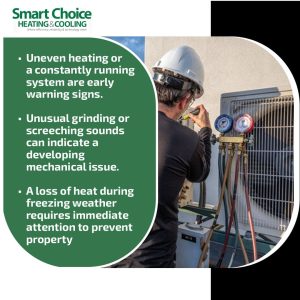
Vancouver’s rapid temperature swings from 45°F to below freezing catch heating systems unprepared. Your thermostat calls for heat repeatedly throughout the night. Run cycles that normally last 15 minutes extend to 45 minutes or longer. Gas valves open and close more frequently than the designed specifications anticipate.
Heat exchangers undergo rapid thermal expansion and contraction. Metal fatigues faster under these conditions. Electrical contacts carrying current for extended periods generate more heat. Terminal connections loosen from prolonged vibration during continuous blower operation.
Heating equipment experiences measurably higher component stress during multi-hour continuous operation without required maintenance.
Moisture, Condensation, and Cold Weather Failures
Pacific Northwest humidity creates failure modes that dry climates rarely experience. Outdoor temperatures drop while relative humidity stays elevated. Condensation forms inside equipment cabinets overnight. Water droplets settle on circuit boards and control modules.
Morning startup attempts find moisture bridging electrical connections. Systems trip safety limits before completing ignition sequences. Condensate drain pans freeze solid when temperatures stay below 32°F for 12+ hours. Trapped water backs up into secondary overflow pans. Some installations lack secondary protection entirely.
Smart Choice Heating & Cooling, Inc. responds to frozen drain line calls throughout Woodland, Hockinson, and Ridgefield when cold snaps persist beyond 48 hours. Frozen condensate lines represent a common emergency failure pattern during freezing conditions in Pacific Northwest homes.
Signs Your Home Needs Emergency HVAC Repair Right Away
System behavior changes signal developing problems before complete failure occurs. Recognizing these patterns allows you to call for heating and cooling repair in Vancouver, WA, before losing heat entirely during freezing weather.
No Heat or Rapid Heat Loss During Freezing Nights
These conditions indicate that heat production has dropped below heat loss rates.
- Your heating system runs constantly, but the indoor temperature continues dropping.
- Thermostats display target settings, yet rooms feel progressively colder.
- You adjust the setpoint higher with no improvement.
- The bathroom and kitchen feel noticeably colder than the living areas.
- Water supply lines under sinks feel cold to touch.
Indoor temperatures dropping into the 50s allow pipes in uninsulated areas to freeze. This creates urgent residential HVAC repair needs across Vancouver and Clark County.
Unusual Sounds, Burning Smells, or System Cycling
Metallic grinding sounds from your furnace blower compartment indicate bearing failure. Screeching noises suggest belt misalignment or excessive wear. Systems starting and stopping every 3-5 minutes never complete warming cycles. Short cycling like this prevents adequate heat distribution to rooms.
Burning dust smells during the first cold-weather operation are normal. Electrical burning odors or hot plastic smells indicate problems requiring immediate attention. These warn of overheating components or failing electrical connections. Odor issues warrant prompt service evaluation and furnace repair in Vancouver, WA.
Safety-Related Warning Signs You Should Never Ignore
Furnace flames appearing yellow or orange instead of blue indicate improper combustion. Flickering flame patterns suggest inadequate air supply or pressure problems. Soot accumulation on furnace cabinet surfaces confirms incomplete combustion. Any carbon monoxide detector activation requires immediate system shutdown.
Unexplained headaches when heating runs could indicate combustion gas spillage. Main electrical panels feeling warm near HVAC breakers suggest overloaded circuits. Our NATE-certified technicians from Smart Choice Heating & Cooling, Inc. address safety concerns during every service call.
Emergency Heat Pump Repair During Winter Cold Snaps
Heat pumps operating at their lower temperature limits experience stress that moderate weather never creates. Southwest Washington’s typical winter temperatures suit heat pumps well. Our occasional dips into the low 20s push these systems beyond optimal performance ranges.
How Cold Weather Affects Heat Pump Performance
Heat pump efficiency drops significantly when outdoor temperatures fall below 35°F. These systems extract heat from outdoor air and concentrate it indoors. Less available heat exists in 25°F air compared to 40°F air. Compressors work harder to achieve the same indoor temperature results.
Defrost cycles reverse refrigerant flow to melt ice accumulating on outdoor coils. These cycles occur every 30-90 minutes in freezing weather versus every few hours at 40°F. Each defrost cycle blows cool air indoors for 5-10 minutes. Your backup heat strips activate to compensate for this temporary cooling.
Outdoor fan motors push against ice-laden coils. Increased resistance strains motor windings. Capacitors fail faster under these load conditions. Smart Choice Heating & Cooling, Inc. is prepared to provide heat pump repair in Vancouver, WA, when temperatures stay below freezing for multiple consecutive days.
When Heat Pump Issues Require Immediate Repair
Outdoor units completely encased in ice cannot produce heat effectively. Normal defrost cycles should prevent heavy ice accumulation. Thick ice coating indicates defrost control failure or refrigerant charge problems. Systems stuck in defrost mode never return to heating operation.
Backup resistance heat running continuously drives energy costs up dramatically while producing insufficient warmth. Grinding noises from outdoor units suggest fan motor failure or compressor damage. Refrigerant leaks reduce system capacity below levels needed for cold-weather operation.
We provide heat pump repair focused on cold-weather performance restoration. Addressing defrost problems quickly prevents compressor damage that requires significantly more expensive repairs. Our highly skilled technicians address common cold-weather heat pump failures throughout our service area.
What to Expect During an Emergency Residential HVAC Repair
Understanding the emergency repair process helps you prepare when heating systems fail during freezing weather. Our approach focuses on rapid diagnosis and restoring heat quickly while maintaining safe operation standards.
Diagnosis Under Urgent Conditions
Heating system diagnosis begins with verifying the power supply before examining internal components. Tripped breakers or blown fuses stop systems completely. Thermostat battery failures cause apparent system malfunctions. These simple checks happen first during diagnostic procedures.
Gas furnace diagnosis includes verifying the gas supply, checking the ignition sequence, and measuring draft pressure. Safety switch testing confirms systems can operate properly. Heat pump diagnosis measures refrigerant pressures, defrost operation, and backup heat function. Temperature differential across coils indicates system capacity.
Emergency residential HVAC repair calls focus on identifying why systems stopped producing heat. Heating capability gets restored using available solutions. Some repairs require ordering specialty components for permanent fixes after initial heat restoration.
Restoring Safe Heat Without Compromising the System
Safety controls remain in place during all heating system repairs. These switches prevent fires, explosions, and carbon monoxide production. Bypassing safety protections creates dangerous conditions. You receive a clear explanation of what failed and which components need replacement.
Component replacement becomes necessary before some systems can operate safely. Smart Choice Heating & Cooling, Inc. maintains parts inventory to support prompt service responses.
Complex repairs requiring specialty parts may involve temporary heating restoration solutions. Permanent repairs follow once the correct components arrive. With this approach, your home maintains heat during cold weather while proper repairs are completed correctly.
How Emergency HVAC Repair Protects Your Home and Family
Heating system failures during freezing weather create risks beyond discomfort. Multiple damage types occur when indoor temperatures drop below safe thresholds throughout Vancouver and Clark County.
Indoor temperatures below 55°F allow water pipes to freeze in uninsulated spaces. Pipes in exterior walls, crawl spaces, and attics lose heat rapidly. Frozen pipes burst when ice expansion cracks pipe walls. Water damage from burst pipes creates costly repairs to floors, walls, and belongings.
Cold indoor temperatures create condensation on walls, windows, and ceilings. This moisture promotes mold growth within 48-72 hours. Drywall absorbs moisture and requires replacement when saturation occurs. Insulation loses effectiveness when wet and may never fully dry.
Proper heating maintains safe indoor air quality and combustion appliance operation. Water heaters and gas ranges require adequate combustion air. Cold homes create negative pressure that can cause backdrafting. Emergency HVAC repair in Vancouver, WA, by our technicians prevents these cascading problems.
Maintaining adequate indoor heating protects household members during freezing weather. Extended exposure to cold indoor temperatures creates discomfort and safety concerns. Prompt heating and air conditioning repair restores safe conditions quickly.

How Vancouver Homeowners Can Reduce Emergency Repair Risk
Proactive steps taken before freezing weather arrives significantly reduce emergency breakdown likelihood. Recognizing early warning signs allows you to schedule service before urgent situations develop. Preventive maintenance typically costs less than emergency repairs.
Early Warning Signs to Watch Before a Cold Snap
Your heating system taking longer to reach thermostat settings indicates declining performance. A furnace that previously reached temperature in 20 minutes now requires 35-40 minutes. This suggests restricted airflow, declining heat exchanger efficiency, or blower problems.
Increasing temperature variation between rooms shows distribution problems. Ductwork leaks or damper failures prevent even heating. Strange sounds that appear then disappear indicate intermittent component problems. Bearings making noise when it’s cold but quieting when warm will fail under continuous operation.
Rising energy bills without corresponding thermostat changes show efficiency losses. Systems working harder to produce the same heat draw more power. These warnings appear during shoulder seasons before cold weather creates emergencies. Addressing these indicators through heating and cooling repair in Vancouver, WA, prevents winter breakdowns.
Why Prompt Repairs Matter Before Temperatures Drop
Worn components that function adequately in moderate weather fail quickly under freezing conditions. Blower motor bearings with slight play seize completely during 18-hour run days. Marginally fouled flame sensors work intermittently when cold, stopping systems unpredictably.
Addressing problems during fall prevents mid-winter failures when heating becomes critical.
Scheduling service during moderate weather allows thorough diagnostics. Smart Choice Heating & Cooling, Inc. provides residential HVAC repair throughout Vancouver, Camas, and Brush Prairie. We accommodate planned service appointments efficiently before winter weather tests your equipment.
When Freezing Weather Hits, Reliable HVAC Repair Matters
Freezing conditions throughout Vancouver, Camas, Ridgefield, Brush Prairie, Battle Ground, Washougal, La Center, Hockinson, Woodland, and all of Clark County test heating systems beyond normal operational parameters. Extended runtime exposes component weaknesses. Moisture combines with cold to create failure modes unique to Pacific Northwest conditions.
Recognizing warning signs early allows you to schedule service before a complete breakdown occurs. Understanding how cold weather stresses furnaces and heat pumps helps you make informed decisions about repair urgency. Call (360) 260-9199 or email us at contactus@smartchoicehvac.com to schedule service when your heating system shows signs of distress.
Smart Choice Heating & Cooling, Inc. brings NATE-certified expertise and Bryant Factory Authorized training to every service call. Our family-owned company has served Southwest Washington since 2007. Our team delivers personalized attention, complete focus, and rewarding results to restore heat when freezing weather strikes. We understand heating failures create stress and urgency for your family’s comfort and safety. When you invest in heating and air conditioning repair in Vancouver, WA, by us, we dedicate our full resources to complete your project efficiently and effectively.